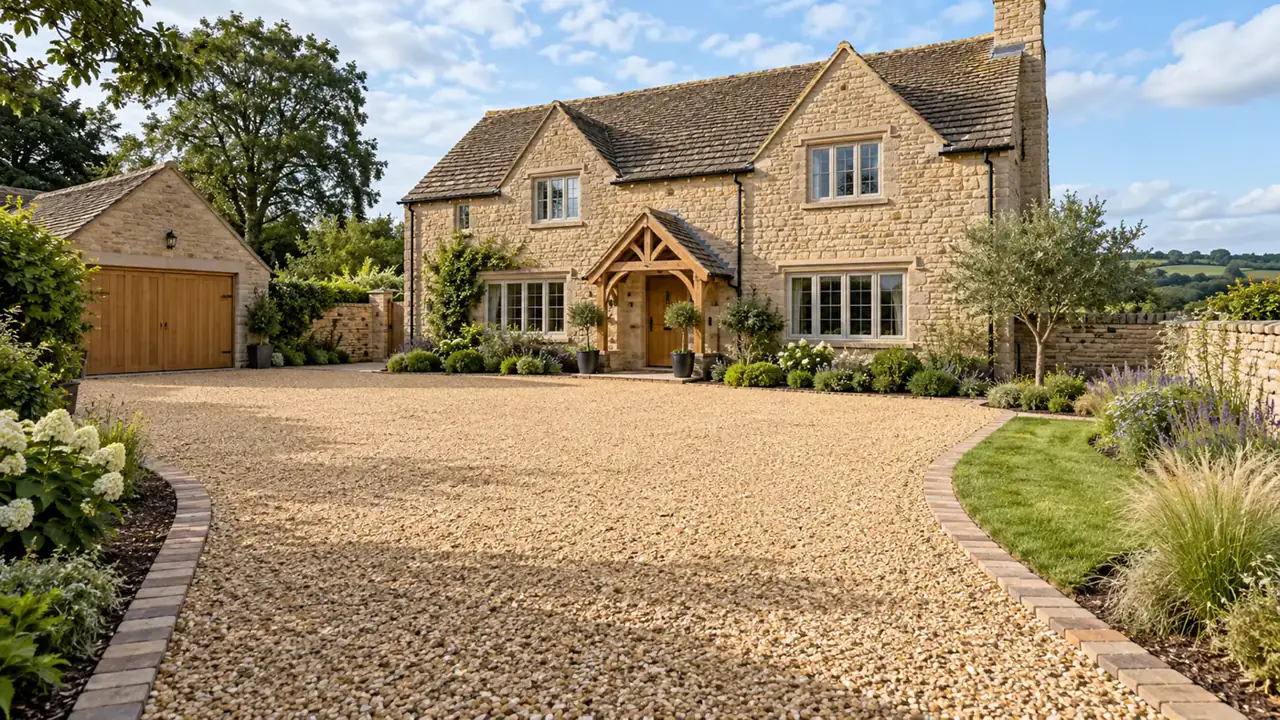
- Angular stone is practical
- Edges contain the surface
- Grids may help turning areas
Pick a stone that behaves well under tyres
Angular, appropriately graded aggregate generally interlocks more than rounded decorative pebbles. Ask the installer for a size that suits vehicles, walking and the chosen laying system. Very deep loose gravel is tiring underfoot and can trap wheels.
Warm golden gravel
Softens red brick and traditional homes. Consider how it will look against the boundary and whether dust or leaves will be conspicuous.
Cool grey gravel
Pairs with modern render, charcoal blocks and simple steel edging. Check colour in actual daylight rather than relying on an online photograph.
Three improvements worth the money
A durable edge restraint
Contain the stone at paths, planting beds and the pavement. The edge should withstand wheel loading and routine maintenance.
A correctly specified sub-base
Prepare the ground for vehicles, with appropriate compaction and separation layers. Gravel alone cannot compensate for soft soil.
Stabilisation where helpful
Suitable cellular grids may reduce movement on steering and turning areas. Their performance depends on the complete installation, not the product alone.
Gravel is not maintenance-free
Plan for raking, replacing displaced stones, removing leaves and weed control. Sloping drives need particular thought because material can travel downhill.
From design to budget
Compare the gravel cost examples with alternative surfaces. Our calculator estimates a measured gravel project but does not independently calculate bags or tonnes of aggregate for DIY purchase.
Common questions
Do gravel grids stop all gravel movement?
No. Correctly fitted grids can help contain stone, but material choice, grading, loading and installation still matter.
Is gravel suitable for a steep driveway?
It can be difficult to keep loose gravel in place on steep slopes; ask for a site-specific stabilisation and drainage assessment.
Sources and important notes
Published 2 November 2026. The figures are broad UK examples for ordinary installations; they are not fixed contractor prices and do not account for every site condition.